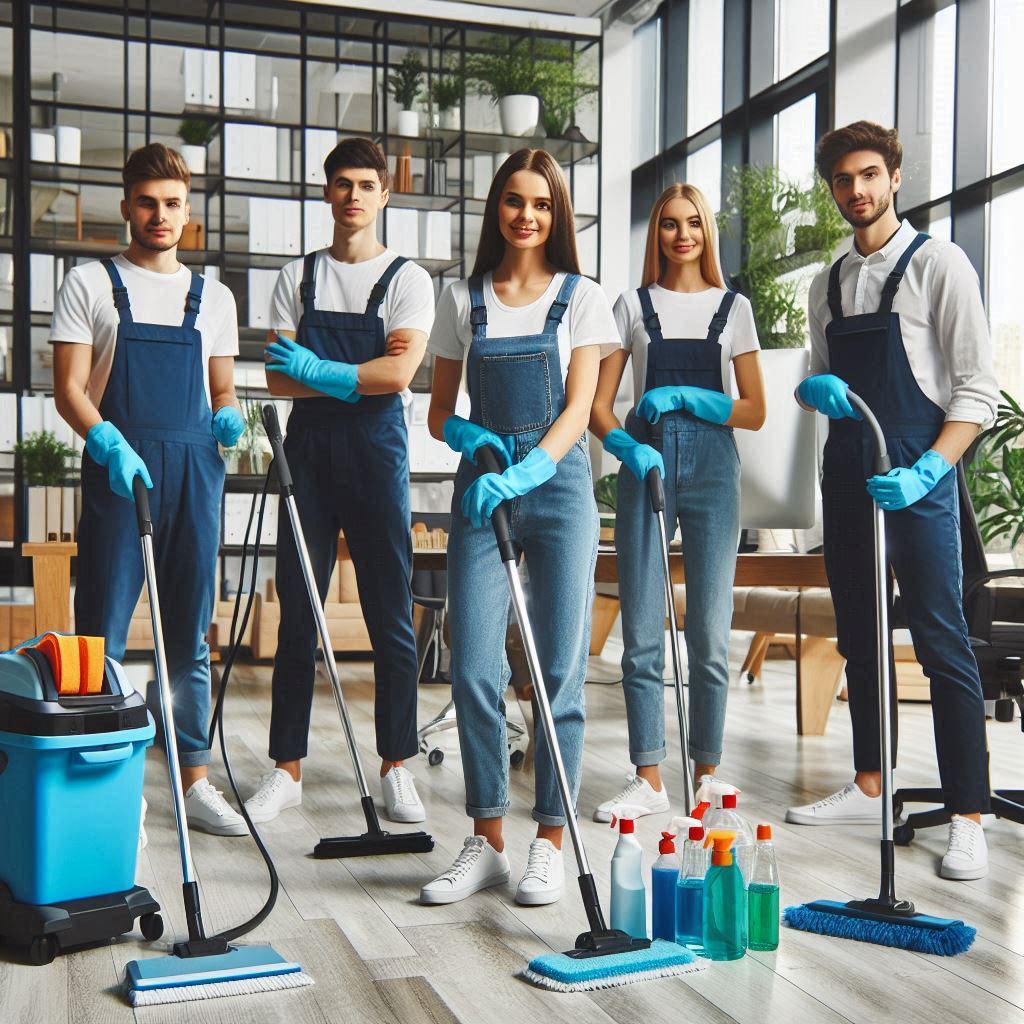
Professional Workplace Sanitation Solutions
Posted by Gregory Caleb on 2024-08-22
1. Implementing Touchless Technology for Sanitation
Touchless technology has become a cornerstone of modern sanitation practices. By minimizing physical contact with surfaces, businesses can significantly reduce the transmission of germs. Here are some examples of touchless technology:
- Touchless faucets and soap dispensers: These devices use sensors to activate water or soap flow, eliminating the need for manual contact.
- Automatic doors: Powered by sensors, automatic doors provide convenient and hygienic access to buildings and rooms.
- Touchless elevators: Elevators equipped with touchless buttons or foot pedals allow users to control their destination without touching surfaces.
- Touchless security systems: Biometric authentication systems, such as fingerprint or facial recognition, offer a secure and hygienic alternative to traditional access cards or passwords.
2. Utilizing UV-C Light for Disinfection Purposes
UV-C light, a specific wavelength of ultraviolet light, is a powerful disinfectant that can effectively kill harmful microorganisms. This technology has gained popularity in various industries, including healthcare, hospitality, and commercial spaces. Here's how UV-C light is used for disinfection:
- Surface disinfection: UV-C lamps can be used to disinfect surfaces, including countertops, floors, and equipment. The short wavelength of UV-C light penetrates the cell walls of bacteria and viruses, disrupting their DNA and preventing them from reproducing.
- Air purification: UV-C air purifiers can be installed in ventilation systems to kill airborne pathogens, such as bacteria and viruses. This helps to improve indoor air quality and reduce the risk of transmission.
- Water disinfection: UV-C light can also be used to disinfect water, making it safe for drinking and other uses. This technology is particularly effective in areas with limited access to clean water.
3. Introducing Antimicrobial Surfaces and Coatings
Antimicrobial surfaces and coatings are designed to inhibit the growth of bacteria and other microorganisms. These materials can be applied to a variety of surfaces, including countertops, doorknobs, and furniture. Here are some benefits of using antimicrobial surfaces and coatings:
- Reduced germ transmission: By preventing the growth of bacteria, antimicrobial surfaces can help to reduce the spread of germs and diseases.
- Long-lasting protection: Antimicrobial coatings can provide long-lasting protection against microbial contamination, even after repeated cleaning.
- Enhanced hygiene: Antimicrobial surfaces can contribute to a cleaner and more hygienic workplace, improving the overall health and well-being of employees.
4. Regular Deep Cleaning and Sanitization Schedules
In addition to daily cleaning and maintenance, regular deep cleaning and sanitization schedules are essential for maintaining a hygienic workplace. This involves thorough cleaning of hard-to-reach areas, such as behind equipment and under furniture, as well as the disinfection of high-touch surfaces. A comprehensive cleaning schedule should include:
- Regular deep cleaning: Deep cleaning should be performed at least once a week or more frequently, depending on the specific needs of the workplace.
- Disinfection of high-touch surfaces: High-touch surfaces, such as doorknobs, light switches, and keyboards, should be disinfected regularly throughout the day.
- Cleaning of ventilation systems: Ventilation systems should be cleaned and maintained to ensure optimal air quality and to prevent the buildup of contaminants.
- Professional cleaning services: For larger or more complex workplaces, professional cleaning services can be hired to ensure thorough and effective cleaning.
5. Providing Sanitation Training for Employees
Proper sanitation training is crucial for ensuring that employees understand and follow best practices for maintaining a hygienic workplace. Training should cover topics such as:
- Hand hygiene: Proper handwashing techniques and the importance of hand sanitizer use.
- Surface cleaning and disinfection: How to effectively clean and disinfect surfaces using appropriate cleaning agents.
- Waste management: Proper disposal of waste and biohazardous materials.
- Cough etiquette: How to cover coughs and sneezes to prevent the spread of germs.
- Personal hygiene: The importance of maintaining good personal hygiene, including showering and changing clothes regularly.
6. Implementing Air Purification Systems to Enhance Indoor Air Quality
Indoor air quality can have a significant impact on the health and well-being of employees. Implementing air purification systems can help to improve air quality by removing contaminants, such as allergens, pollutants, and airborne pathogens. Air purification systems can be equipped with various technologies, including:
- HEPA filters: High-efficiency particulate Air (HEPA) filters can capture particles as small as 0.3 microns, including viruses and bacteria.
- UV-C sterilization: UV-C light can be used to kill airborne pathogens, as discussed earlier.
- Ionization: Ionizers can neutralize airborne particles, reducing their ability to cause allergies or respiratory problems.
7. Integrating Smart Sensors for Real-Time Monitoring of Sanitation Levels
Smart sensors can be used to monitor various aspects of workplace sanitation, including temperature, humidity, and the presence of microorganisms. This data can be used to identify areas where sanitation measures may be inadequate and to optimize cleaning and disinfection schedules. Some examples of smart sensors that can be integrated into workplace sanitation systems include:
- Temperature and humidity sensors: These sensors can monitor environmental conditions that can affect the growth of microorganisms.
- Air quality sensors: Air quality sensors can detect the presence of pollutants and allergens in the air.
- Biomarker sensors: Biomarker sensors can detect the presence of specific microorganisms, such as bacteria and viruses.
8. Exploring Eco-Friendly Cleaning Products to Reduce Environmental Impact
The use of traditional cleaning products can hurt the environment. By exploring eco-friendly alternatives, businesses can reduce their environmental footprint while still maintaining a high level of sanitation. Some examples of eco-friendly cleaning products include:
- Plant-based cleaning agents: These cleaning agents are derived from natural sources, such as plants and minerals.
- Enzymatic cleaners: Enzymatic cleaners use enzymes to break down organic matter, making them effective and environmentally friendly.
- Reusable cleaning cloths: Reusable cleaning cloths can reduce waste and save money.
9. Implementing Waste Management Strategies for Proper Disposal of Sanitation Materials
Proper waste management is essential for preventing the spread of germs and protecting the environment. Businesses should implement waste management strategies that ensure the safe and responsible disposal of sanitation materials. This includes:
- Segregating waste: Sanitation materials should be segregated from other types of waste to prevent cross-contamination.
- Proper disposal: Sanitation materials should be disposed of according to local regulations and guidelines.
- Recycling: Reusable materials, such as cleaning cloths and plastic bottles, should be recycled whenever possible.
10. Implementing Automated Cleaning Robots for Efficient Sanitation
Automated cleaning robots can be used to perform a variety of cleaning tasks, such as sweeping, mopping, and scrubbing floors. These robots can help to improve cleaning efficiency and reduce labor costs. Some of the benefits of using automated cleaning robots include:
- Increased efficiency: Automated cleaning robots can work around the clock, cleaning floors and other surfaces more efficiently than human workers.
- Reduced labor costs: By automating cleaning tasks, businesses can reduce their reliance on human labor.
- Improved consistency: Automated cleaning robots can provide consistent cleaning results, reducing the risk of human error.
11. Utilizing Ozone Generators for Air and Surface Disinfection
Ozone generators can be used to produce ozone gas, a powerful disinfectant that can kill harmful microorganisms. Ozone can be used to disinfect both air and surfaces, making it a versatile tool for workplace sanitation. Some of the benefits of using ozone generators include:
- Effective disinfection: Ozone is a highly effective disinfectant that can kill a wide range of microorganisms.
- Rapid disinfection: Ozone can disinfect air and surfaces quickly, making it ideal for emergencies.
- No chemical residue: Ozone breaks down into oxygen after it has done its job, leaving no harmful chemical residue.
12. Introducing Self-Sanitizing Surfaces That Continuously Kill Germs
Self-sanitizing surfaces are equipped with antimicrobial agents that continuously kill germs, reducing the need for frequent cleaning. These surfaces can be used in high-touch areas, such as doorknobs, countertops, and handrails. Some of the benefits of using self-sanitizing surfaces include:
- Reduced germ transmission: Self-sanitizing surfaces can help to reduce the spread of germs and diseases.
- Long-lasting protection: These surfaces provide continuous protection against microbial contamination.
- Reduced cleaning time: By reducing the need for frequent cleaning, self-sanitizing surfaces can save time and labor.
13. Implementing a Color-Coded Cleaning System for Different Work Areas
A color-coded cleaning system can help to ensure that different work areas are cleaned using appropriate cleaning agents and procedures. Each color can represent a specific cleaning task or area, such as general cleaning, food safety cleaning, or sanitation of high-touch surfaces. This system can help to improve cleaning efficiency and reduce the risk of cross-contamination.
14. Providing Sanitation Stations with Hand Sanitizers and Disinfectant Wipes
Sanitation stations should be placed throughout the workplace to provide employees with easy access to hand sanitizers and disinfectant wipes. These stations should be stocked regularly to ensure that they are always available. Providing sanitation stations can help to encourage good hand hygiene and reduce the spread of germs.
15. Implementing IoT-Connected Sanitation Devices for Data-Driven Insights
Internet of Things (IoT)-connected sanitation devices can be used to collect data on various aspects of workplace sanitation, such as temperature, humidity, and the presence of microorganisms. This data can be analyzed to identify areas where sanitation measures may be inadequate and to optimize cleaning and disinfection schedules. Some examples of IoT-connected sanitation devices include:
- Smart sensors: Smart sensors can monitor environmental conditions and detect the presence of contaminants.
- Connected cleaning equipment: Connected cleaning equipment can track usage and performance, helping to identify areas that may require more attention.
- Automated disinfection systems: Automated disinfection systems can be connected to the internet to provide real-time data on their operation and effectiveness.