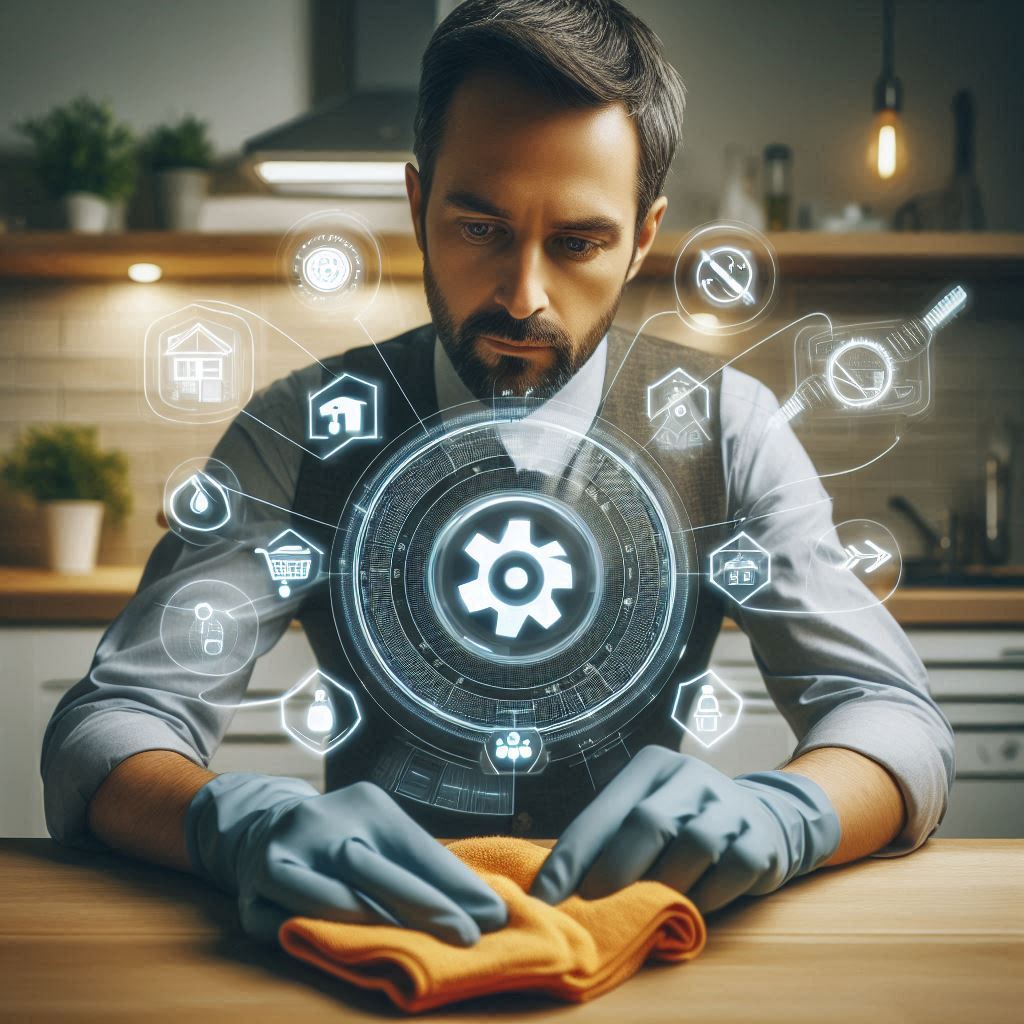
Utilizes advanced technology for efficient cleaning processes
Posted by on
The cleaning industry has undergone significant transformation over the years, driven by technological advancements that have revolutionized traditional cleaning methods. As businesses and organizations strive for higher efficiency and sustainability, integrating cutting-edge technologies has become essential in delivering superior cleaning services. From robotic cleaners to nanotechnology, using advanced tools and systems redefines the standards of cleanliness, productivity, and environmental responsibility.
These technological innovations enhance the effectiveness of cleaning processes, optimize resource usage, reduce costs, and ensure consistent quality. By adopting advanced technologies, cleaning service providers can offer more precise, thorough, and sustainable solutions that meet clients' evolving needs across various industries. This article explores the different technologies utilized to achieve efficient cleaning processes and their impact on the industry.
Incorporates Robotic Cleaners for Precise and Thorough Cleaning
Robotic cleaners have become a game-changer in the industry, offering unparalleled precision and thoroughness in various cleaning tasks. These autonomous machines are equipped with sensors, cameras, and advanced navigation systems that allow them to navigate complex environments, avoid obstacles, and clean areas that are often difficult to reach with traditional methods.
Robotic vacuum cleaners, for example, are widely used in commercial spaces such as offices, hotels, and retail stores. These devices can map out a space's layout, identify areas that require more attention, and adjust their cleaning patterns accordingly. Some models are even capable of detecting the type of surface they are cleaning—whether it's carpet, hardwood, or tile—and adjust their suction power and brush settings to ensure optimal cleaning results.
In addition to vacuuming, robotic cleaners are also being used for tasks such as mopping, window cleaning, and even disinfecting surfaces. The precision offered by these robots ensures that every inch of the area is cleaned thoroughly, leaving no spot untouched. Moreover, their ability to operate autonomously allows cleaning staff to focus on more complex tasks, thereby increasing overall efficiency.
Implements IoT Devices for Real-Time Monitoring and Optimization
The Internet of Things (IoT) has brought significant advancements in the way cleaning processes are monitored and optimized. IoT devices, such as smart sensors and connected cleaning equipment, enable real-time data collection and analysis, providing valuable insights into the efficiency and effectiveness of cleaning operations.
For instance, IoT-enabled sensors can be installed in various areas of a building to monitor foot traffic, air quality, and cleanliness levels. This data is then transmitted to a central system where it can be analyzed to determine the optimal cleaning schedules and frequencies. By knowing which areas are used more frequently, cleaning staff can prioritize high-traffic zones and allocate resources more efficiently.
IoT devices also enable remote monitoring of cleaning equipment, allowing for real-time tracking of performance and maintenance needs. If a machine is not functioning optimally or requires servicing, the system can automatically alert the maintenance team, minimizing downtime and ensuring that cleaning operations run smoothly.
Furthermore, IoT technology facilitates the integration of cleaning processes with other building management systems, such as HVAC and lighting, to create a more holistic approach to facility management. This integration not only enhances efficiency but also contributes to energy savings and environmental sustainability.
Utilizes Eco-Friendly Cleaning Solutions for Sustainability
Sustainability is a growing concern in the cleaning industry, and the use of eco-friendly cleaning solutions is a critical component of environmentally responsible cleaning practices. Advanced technology has enabled the development of highly effective cleaning products that are safe for the environment and human health.
These eco-friendly solutions are formulated with biodegradable ingredients and are free from harmful chemicals such as phosphates, chlorine, and synthetic fragrances. Despite being gentle on the environment, they are powerful enough to remove dirt, grime, and stains effectively. Enzymatic cleaners, for example, use natural enzymes to break down organic matter, making them ideal for cleaning kitchens, restrooms, and other areas prone to bacterial growth.
In addition to liquid cleaning products, eco-friendly technology also includes innovations such as microfiber cleaning cloths and mops, which are designed to capture and remove dirt without the need for harsh chemicals. Microfiber materials have a unique structure that allows them to trap dust, bacteria, and allergens, providing a thorough cleaning with minimal water and detergent.
By utilizing eco-friendly cleaning solutions, businesses can reduce their environmental impact while maintaining high standards of cleanliness. This approach not only benefits the planet but also promotes healthier indoor environments for building occupants.
Utilizes AI Algorithms for Predictive Maintenance and Scheduling
Artificial Intelligence (AI) is playing an increasingly important role in optimizing cleaning processes through predictive maintenance and scheduling. AI algorithms analyze large amounts of data collected from IoT devices, cleaning equipment, and other sources to predict when maintenance is needed and to create more efficient cleaning schedules.
Predictive maintenance uses AI to identify potential equipment failures before they occur. By analyzing data such as vibration patterns, temperature fluctuations, and usage hours, AI can detect signs of wear and tear or impending malfunctions. This allows cleaning companies to perform maintenance proactively, reducing the likelihood of unexpected breakdowns and extending the lifespan of the equipment.
AI also optimizes cleaning schedules by analyzing factors such as building occupancy, historical cleaning data, and environmental conditions. For example, AI can determine the best times to clean specific areas based on when they are most likely to be used or when dirt levels are expected to be highest. This ensures that cleaning is performed when it is most needed, enhancing efficiency and reducing unnecessary labour.
Moreover, AI-driven systems can adapt to changes in real time, adjusting schedules and resource allocation as needed. This level of flexibility and optimization is invaluable in extensive facilities where cleaning needs can vary significantly from day to day.
Integrates Drones for Aerial Cleaning of High-Rise Buildings
High-rise buildings present unique challenges for cleaning, particularly when it comes to exterior surfaces such as windows, facades, and roofs. Traditional methods often require scaffolding, ropes, and manual labour, which can be time-consuming, costly, and risky. Drones offer a safer, more efficient alternative for aerial cleaning tasks.
Equipped with high-resolution cameras, sensors, and cleaning attachments, drones can be used to clean windows and facades of skyscrapers with precision. These uncrewed aerial vehicles (UAVs) can navigate around the building's exterior, spraying cleaning solutions and using brushes or squeegees to remove dirt and grime. Drones are particularly effective for reaching areas that are difficult or dangerous for human workers to access.
In addition to cleaning, drones can also be used for inspection and maintenance tasks. For example, they can capture detailed images of the building's exterior to identify areas that require repair or additional cleaning. This reduces the need for manual inspections, which can be labour-intensive and hazardous.
The use of drones in high-rise cleaning not only improves efficiency but also enhances safety by minimizing the risks associated with working at heights. It also reduces the time and cost involved in traditional cleaning methods, making it a valuable tool for property managers and cleaning companies.
Implements Self-Driving Cleaning Robots for Large Office Spaces
Large office spaces require consistent and thorough cleaning to maintain a healthy and productive environment. Self-driving cleaning robots are an innovative solution that automates routine cleaning tasks, freeing up human staff to focus on more complex duties.
These robots are equipped with advanced navigation systems, sensors, and AI algorithms that allow them to operate autonomously in large, complex environments. They can navigate around obstacles, avoid collisions, and adapt to changes in the layout of the space. Self-driving robots can perform tasks such as vacuuming, mopping, and sweeping with a high degree of accuracy and consistency.
One of the key advantages of self-driving cleaning robots is their ability to operate during non-business hours, ensuring that cleaning is done without disrupting daily operations. They can be programmed to clean specific areas at specific times, and their performance can be monitored and adjusted remotely.
In addition to basic cleaning tasks, some self-driving robots are equipped with features such as UV-C lights for disinfection, making them particularly useful in environments where hygiene is a top priority, such as healthcare facilities and schools. By automating routine cleaning tasks, these robots increase efficiency, reduce labour costs, and ensure a consistently clean environment.
Utilizes Nanotechnology for Ultra-Fine Surface Cleaning
Nanotechnology is a cutting-edge field that has found applications in various industries, including cleaning. Nanotechnology involves the manipulation of materials at the molecular or atomic level, allowing for the creation of ultra-fine particles that can be used to clean surfaces more effectively than traditional methods.
Nano-coatings are one of the most common applications of nanotechnology in cleaning. These coatings can be applied to surfaces to create a protective layer that repels dirt, water, and other contaminants. For example, nano-coatings on windows or bathroom tiles can make them more resistant to stains and easier to clean. The coatings are also often antimicrobial, helping to prevent the growth of bacteria and mould.
Nanoparticles are also used in cleaning solutions to break down and remove dirt at a molecular level. These particles are small enough to penetrate deep into surfaces, removing dirt and stains that traditional cleaning agents might miss. Nanotechnology-based cleaning products are particularly effective for cleaning porous surfaces, such as stone and concrete, where dirt can become deeply embedded.
The use of nanotechnology in cleaning not only improves the effectiveness of cleaning processes but also extends the lifespan of surfaces by providing long-lasting protection. This technology is precious in environments where cleanliness and hygiene are critical, such as hospitals, laboratories, and food processing facilities.
Adopts Virtual Reality Training for Cleaning Staff to Enhance Efficiency
Training is a critical component of any cleaning operation, and the adoption of virtual reality (VR) technology is transforming the way cleaning staff are trained. VR offers a highly immersive and interactive training experience that can significantly enhance the skills and efficiency of cleaning staff.
In a VR training program, cleaning staff can practice various tasks in a simulated environment that replicates real-world conditions. For example, they can learn how to operate cleaning equipment, apply cleaning solutions, and follow safety protocols without the risks and costs associated with on-the-job training. VR training can also be tailored to specific environments, such as hospitals, schools, or office buildings, allowing staff to become familiar with the unique challenges of each setting.
One of the key benefits of VR training is that it allows for repetitive practice in a controlled environment. Staff can repeat tasks until they are confident in their abilities, and instructors can provide real-time feedback and guidance. This leads to faster skill acquisition and improved performance.
VR training also enhances safety by allowing staff to experience and respond to emergency situations, such as chemical spills or equipment malfunctions, in a virtual environment. This prepares them to handle real-life emergencies with confidence and competence.
By adopting VR technology for training, cleaning companies can ensure that their staff are well-prepared, skilled, and efficient in their roles. This not only improves the quality of service but also contributes to higher job satisfaction and retention rates.
Conclusion
The integration of advanced technology into cleaning processes has revolutionized the industry, offering more efficient, effective, and sustainable solutions. From robotic cleaners and IoT devices to nanotechnology and virtual reality training, these innovations are setting new standards for cleanliness and productivity.
By embracing these technologies, cleaning service providers can deliver superior results, optimize resource usage, and reduce environmental impact. As the industry continues to evolve, the adoption of advanced technology will remain a key driver of success, ensuring that cleaning processes are not only efficient but also aligned with the growing demand for sustainability and innovation.